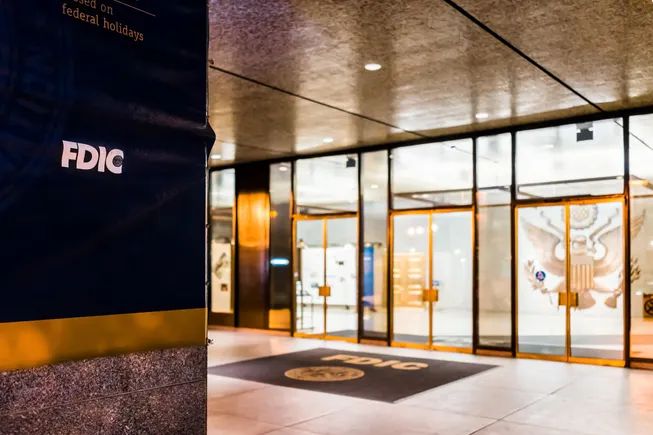
The FDIC and the Indiana Department of Financial Institutions issued a consent order against Bloomfield-based Farmers and Mechanics Federal Savings Bank on April 15, 2026, citing unsafe or unsound banking practices and weaknesses in capital, management, earnings, and sensitivity to market risk. The order is authorized under 12 U.S.C. § 1818.
The bank, a $116 million-asset institution founded in 1892, has posted losses for two consecutive years: $3.5 million in 2024 and $308,000 in 2025, with losses continuing into Q1 2026 ($55,000). Its last annual profit was $77,000, in 2023. Bank President Joshua Riggins attributed the red ink to “earnings pressure across our balance sheet” from rising interest rates.
Under the order, Farmers and Mechanics must maintain a Tier 1 capital ratio of at least 8.5% and a total risk-based capital ratio of 12%. It must draft a written profitability plan identifying when it expects to return to black, establish thresholds for tracking material deviations from that plan, and submit quarterly progress reports within 30 days of each quarter’s close. The bank must also create a liquidity improvement plan covering one-, two-, and three-month horizons, and tighten controls over financial reporting, a weakness the FDIC flagged in a September 2025 exam.
Riggins argues the 11-month gap between a June 2025 document reference and the April 2026 order “indicates both the bank’s comparative stability and the agencies’ observance of established procedures.” The order itself tells a different story: management is named as a core weakness, and the bank must now obtain advance written approval from regulators before hiring any senior executive officer or adding anyone to the board. For a four-office, $116 million institution, that’s not boilerplate. It’s an FDIC hand on the wheel.
The first quarterly progress report is due July 30, 2026.
James Okafor