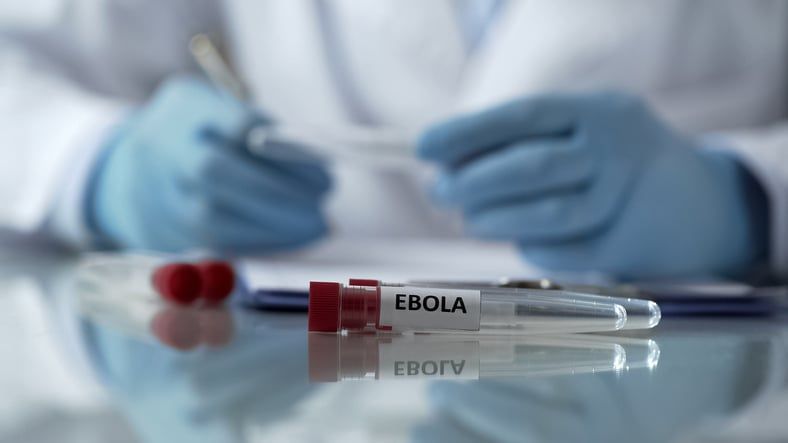
MBP134 and remdesivir are headed into a DRC mortality trial, WHO Director-General Tedros Adhanom Ghebreyesus confirmed Wednesday — a clinical evaluation of either drug against Bundibugyo ebolavirus.
The WHO expert advisory covers Mapp Biopharmaceutical’s MBP134 and Gilead Sciences’ remdesivir, branded as Veklury during COVID-19. Both the U.S. and Gilead are donating doses. Preparations are complete; the trial starts next week.
The DRC Bundibugyo outbreak has logged 1,094 confirmed cases and 277 deaths, and there’s no licensed therapeutic or vaccine for this ebolavirus strain. Oxford University is partnering with DRC’s National Institute for Biomedical Research and the Alliance for International Medical Action on the trial, testing MBP134 and remdesivir individually and in combination to reduce mortality in confirmed BVD patients. WHO advisors also recommended maftivimab, one ingredient in Regeneron’s triple-antibody Inmazeb cocktail, for potential evaluation. Gilead’s experimental obeldesivir is positioned for post-exposure prophylaxis, and Merck has flagged molnupiravir, already approved as the Ebola drug Lagevrio, as a potential countermeasure.
Remdesivir’s COVID arc is the useful comparison here. Veklury became one of the first antivirals cleared for hospitalized COVID-19 patients, generating billions for Gilead in a drug class with limited prior precedent. It’s a different pathogen and a different efficacy question: whether a broad-spectrum antiviral pairs with a monoclonal antibody to close the mortality gap that neither has closed alone against Bundibugyo. The combination arm is where the real signal comes.
Trial starts in DRC next week.
Sarah Chen