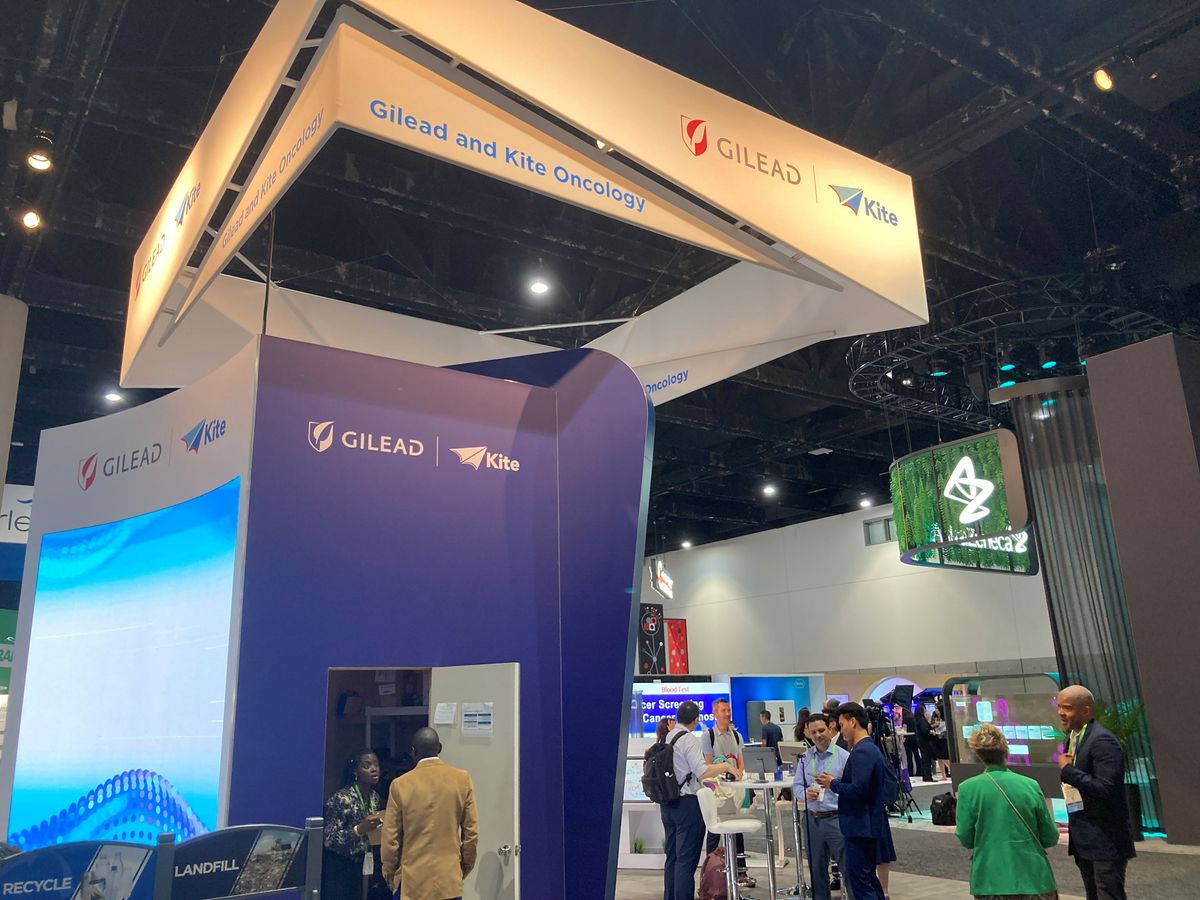
Gilead paid $3.15 billion upfront for Tubulis in April. At ASCO in Chicago on Saturday, TUB-040 had to earn it.
The antibody-drug conjugate targets NaPi2b, a sodium-dependent phosphate transporter present in the vast majority of ovarian cancer cells. In the Napistar 1-01 first-in-human trial, it shrank tumors in 61% of 46 patients treated at 1.67 to 3.3 mg/kg. Average progression-free survival was 11 months. Standard of care in platinum-resistant ovarian cancer: five.
These weren’t easy patients. Each had tried an average of four prior therapies, including Genentech’s Avastin or a PARP inhibitor. A 61% response rate in that context makes the $3.15 billion price tag harder to argue with.
Safety wasn’t clean, but it compared well against class norms. All 67 evaluated patients had treatment-related adverse events; 42% experienced grade 3 or worse neutropenia, 27% anemia, and 18% thrombocytopenia. Gilead CMO Dietmar Berger said TUB-040 produces no lung toxicity and no ocular toxicity, two persistent ADC liabilities, which positions it to combine with platinum-based chemotherapy in earlier lines of therapy.
Gilead has now closed three acquisitions this year: arcellx for CAR-T, Ouro Medicines for T-cell engagers, and Tubulis for ADCs. The Tubulis platform’s payload flexibility is what separates this from a standard pipeline buy. Berger said it could eventually extend beyond oncology into inflammation and virology. The Munich ADC innovation center will operate as a research hub for Gilead.
Gilead is in advanced discussions with FDA on phase 3 trial design for platinum-resistant ovarian cancer. The acquisition closed May 21.
— Sarah Chen