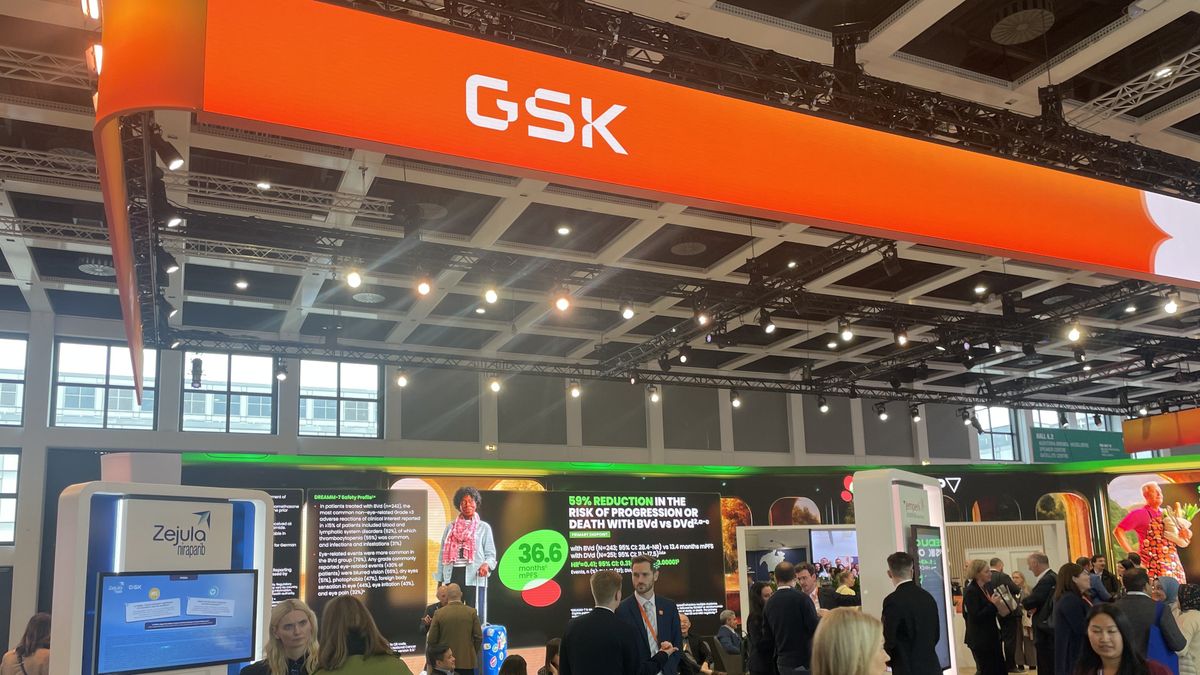
GSK is sending mocertatug rezetecan (mo-rez) into five phase 3 trials after phase 1b data posted a 62% confirmed overall response rate in platinum-resistant ovarian cancer patients, and 67% in endometrial cancer.
The 180-patient study, presented at SGO this week in Puerto Rico, tested multiple dose levels across both indications. At 5.8 mg/kg every three weeks, 34 platinum-resistant ovarian cancer patients hit that 62% ORR. Twelve endometrial cancer patients at 4.8 mg/kg landed at 67%. GSK’s head of oncology Hesham Abdullah called this a “difficult-to-treat” population: over half had already tried two or more therapies, and statistical five-year survival runs just 20% to 30%.
The safety data didn’t slow anything down. Interstitial lung disease, the class-level toxicity haunting approved ADCs, came in at only 4% across both cohorts. Treatment-related adverse events affected 42% of ovarian cancer patients and 35% of endometrial cancer patients, mostly hematologic. Discontinuation rates held at 2% and 4%, respectively.
Five phase 3 studies are now in motion: platinum-resistant ovarian cancer, platinum-sensitive disease, front-line HR-proficient ovarian cancer, first-line endometrial cancer, and second-line endometrial cancer. Abdullah said GSK “absolutely” believes mo-rez will be a blockbuster. That’s a bet with real context: Jemperli and Zejula, GSK’s existing drugs in these same indications, pulled in £1.4 billion ($1.8 billion) last year.
New CEO Luke Miels, who took the helm at the start of 2026, gets credit for the pace. Abdullah cited his “scientific courage.” All five trials are expected to start within the next few months.
— Sarah Chen