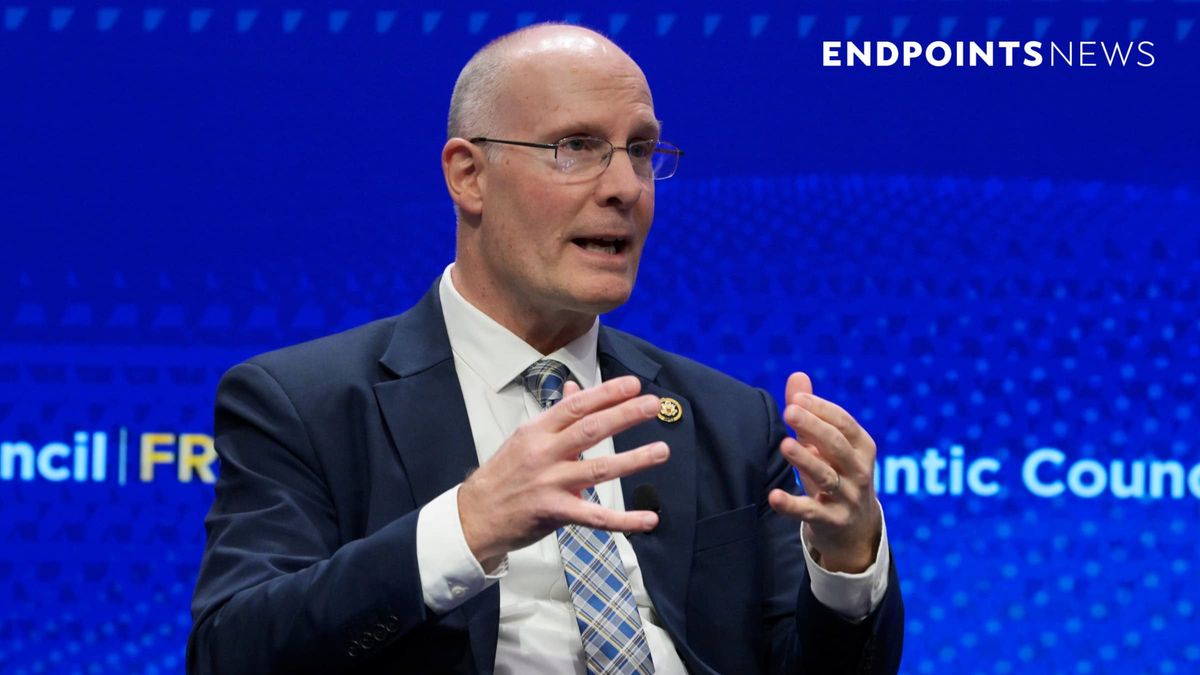
Rep. John Moolenaar (R-MI), chairman of the House Select Committee on the Chinese Communist Party, asked Treasury Secretary Scott Bessent on May 21 to designate biotechnology as a “prohibited technology” under the Comprehensive Outbound Investment National Security Act, signed into law in December 2025 as part of the FY2026 National Defense Authorization Act.
The target: $136 billion in cross-border pharma out-licensing to Chinese companies in 2025 alone. Chinese firms now participate in 48% of global pharmaceutical licensing deals worth $50 million or more, up from 0% in 2020. Moolenaar’s letter to the Treasury Department, reviewed by The 483, singles out the Bristol Myers Squibb-Hengrui Pharma collaboration announced May 12, a 13-program deal in oncology, hematology, and immunology worth up to $15.2 billion including $600 million upfront, as Exhibit A for what Treasury should stop.
Under the COINS Act, Treasury has 450 days from enactment to promulgate implementing regulations. A biotech designation would cover licensing agreements, joint ventures, equity investments, and IP transfers: the full range of structures that Chinese companies and their US partners have used to build this pipeline.
The letter treats deals like BMS-Hengrui as national security events requiring government clearance. If Treasury complies, every pharma company with active Chinese licensing deals needs to pre-clear them before signing. Eli Lilly, also named in the letter, faces the same calculus. The COINS Act framework already exists; this is a request to fill in the named category.
Moolenaar’s letter isn’t self-executing. Treasury controls the regulatory calendar, and the 450-day implementation window doesn’t close until early 2027. The industry has time to lobby, and it will.
James Okafor