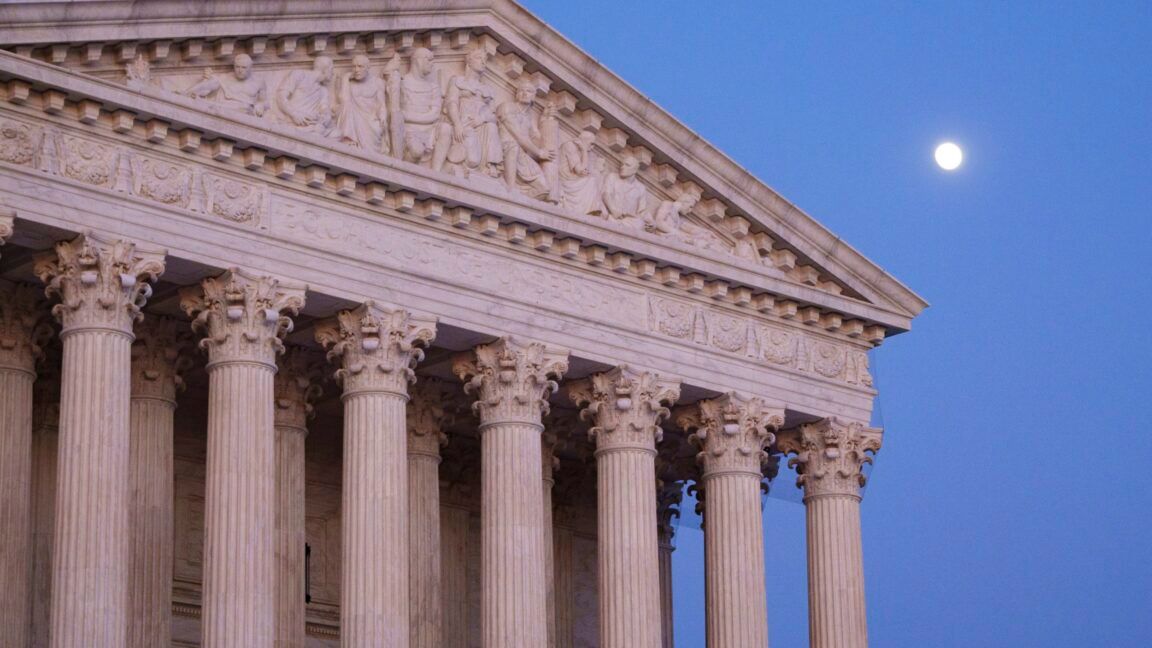
AT&T and Verizon paid $104 million in FCC fines for selling users’ real-time location data without consent, and the Supreme Court just ruled they can’t get the money back.
In an 8-1 decision written by Chief Justice John Roberts, the court reversed the 5th Circuit’s ruling that had sided with AT&T, while upholding the 2nd Circuit’s ruling against Verizon. The carriers had argued that the FCC’s penalty process denied them a Seventh Amendment right to a jury trial. Roberts rejected that: FCC fine orders aren’t final judgments. If carriers refuse to pay, the government must sue to collect, and that process includes a de novo jury trial. The carriers chose to pay first and fight later. That choice, the court said, doesn’t make the system unconstitutional.
The FCC fined AT&T and Verizon $104 million in 2024 for violations that came to light in 2018: both carriers had sold users’ precise real-time location to data aggregators, some of whom passed it to bounty hunters and a rogue sheriff who used it to track people without their knowledge.
Carriers leaned hard on Jarkesy, the 2024 case that stripped the SEC’s in-house fine authority. Roberts drew a clean distinction: the SEC could impose and collect fines entirely through its own administrative process, without a court. The FCC can’t. Before any penny changes hands, a jury decides. “The jury gets the last word,” Roberts wrote.
That’s the read-across every agency enforcement lawyer needed after Jarkesy. The FCC’s administrative fine process isn’t the SEC’s, and the court just put that in writing, 8-1.
For AT&T, $57 million is well under 0.1% of annual revenue. The next question is whether Jarkesy claimants try similar constitutional challenges at the CFTC, FTC, and EPA, where enforcement structures differ from both the SEC and FCC.
Marcus Webb