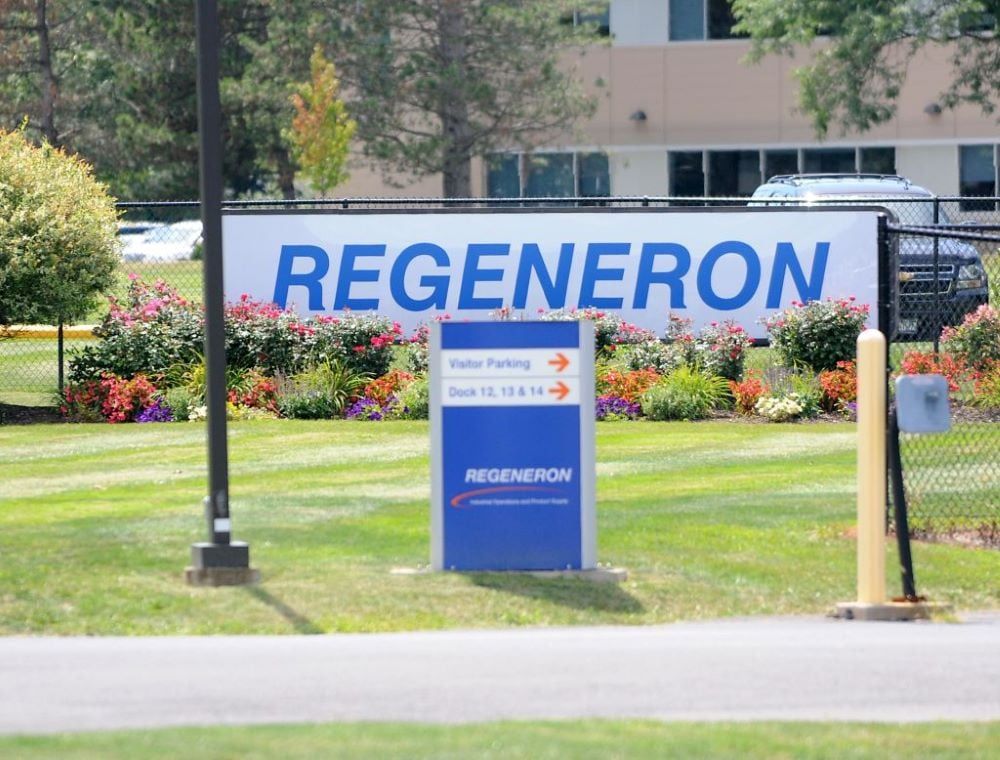
Regeneron signed the White House’s most-favored-nation drug pricing deal Thursday, becoming the 17th and final company to do so — closing out a sweep that now covers every drugmaker the Trump administration targeted last year.
The deal’s terms follow the pattern set by Pfizer (first in), AbbVie, and J&J (most recent before Regeneron): Medicaid prices aligned with comparable developed nations, no better pricing offered for new drugs abroad, and U.S. manufacturing pledges. Regeneron’s side of the ledger: more than $9 billion in domestic manufacturing and R&D commitments, including a $3 billion pact with CDMO Fujifilm Biotechnologies in North Carolina and roughly $2 billion into a Saratoga Springs production site. What Regeneron gets in return: immunity from future pricing mandates and three years of tariff relief.
The company is also offering Praluent, its cholesterol-lowering drug, at a discount through Trumprx.gov, and will align future therapy prices with that defined group of countries. Separately, Regeneron received FDA approval Thursday for Otarmeni, the first gene therapy for genetic hearing loss, which it says won’t carry a price tag in the U.S.
The framework’s completion raises a question that’s gone unanswered: it doesn’t appear to cover smaller and midsized biopharmas, leaving them potentially exposed to tariff pressure without a deal path. Democratic Sen. Ron Wyden has sent letters to 11 signatories demanding specifics on which drugs are covered and what Medicaid programs will actually pay.
The terms remain private.
Diana Kowalski