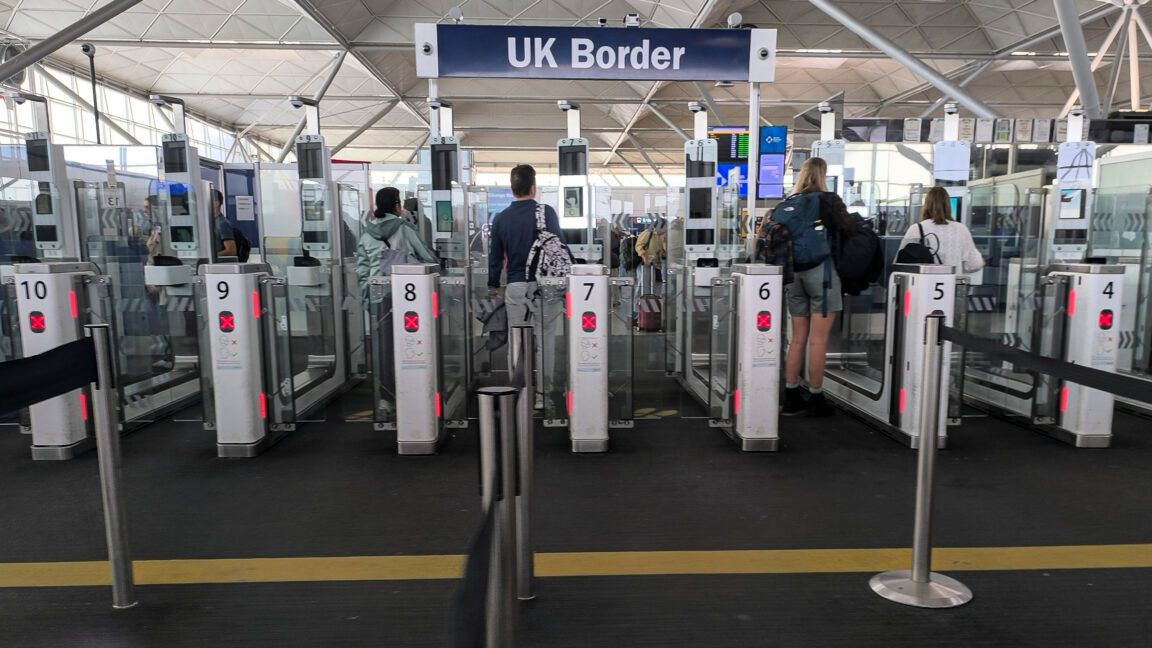
The UK Home Office dropped more than $400,000 on AI age-scanning software this May, knowing its own tests showed the system mistakes children for adults and performs worst on the people it’ll see most.
FAE, facial age estimation, uses machine learning to predict age from a photo. Starting in 2027, border officers will use it to assess asylum seekers who don’t have documents. Children wrongly flagged as adults lose legal protections and can be placed in adult detention.
A leaked Home Office report from April 2025, obtained by WIRED and Lighthouse Reports, tested seven FAE algorithms against 2.5 million images. The best-performing system had “substantial deviations” for Sub-Saharan Africans, the largest group crossing the Channel in small boats. For females in that group, the average error was 4.6 years, enough to call a 13.5-year-old an adult.
The money went to German firm Cognitec. NIST’s own testing shows FAE accuracy degrades with photo quality and error rates run higher for females. Cognitec’s system misclassified twice as many 16-year-olds as adults in border crossing photos compared to visa-quality images. West African 16-year-olds were flagged as adults more often than Eastern European peers.
The Home Office disbanded a scientific committee while exploring AI. Former member Tim Cole of University College London calls the face scans “hideously inaccurate.” Sixty-two organizations this week sent an open letter demanding the program be scrapped.
For AI product teams, the risk is bigger than the UK: this is believed to be the first government to deploy FAE in immigration screening at scale. If 2027 goes forward without published accuracy minimums or demographic-parity requirements, it won’t stay a UK program. Border agencies in the EU, Australia, and the US are watching.
A National Physical Laboratory review has been commissioned. No published standards yet.
Nathan Zakhary